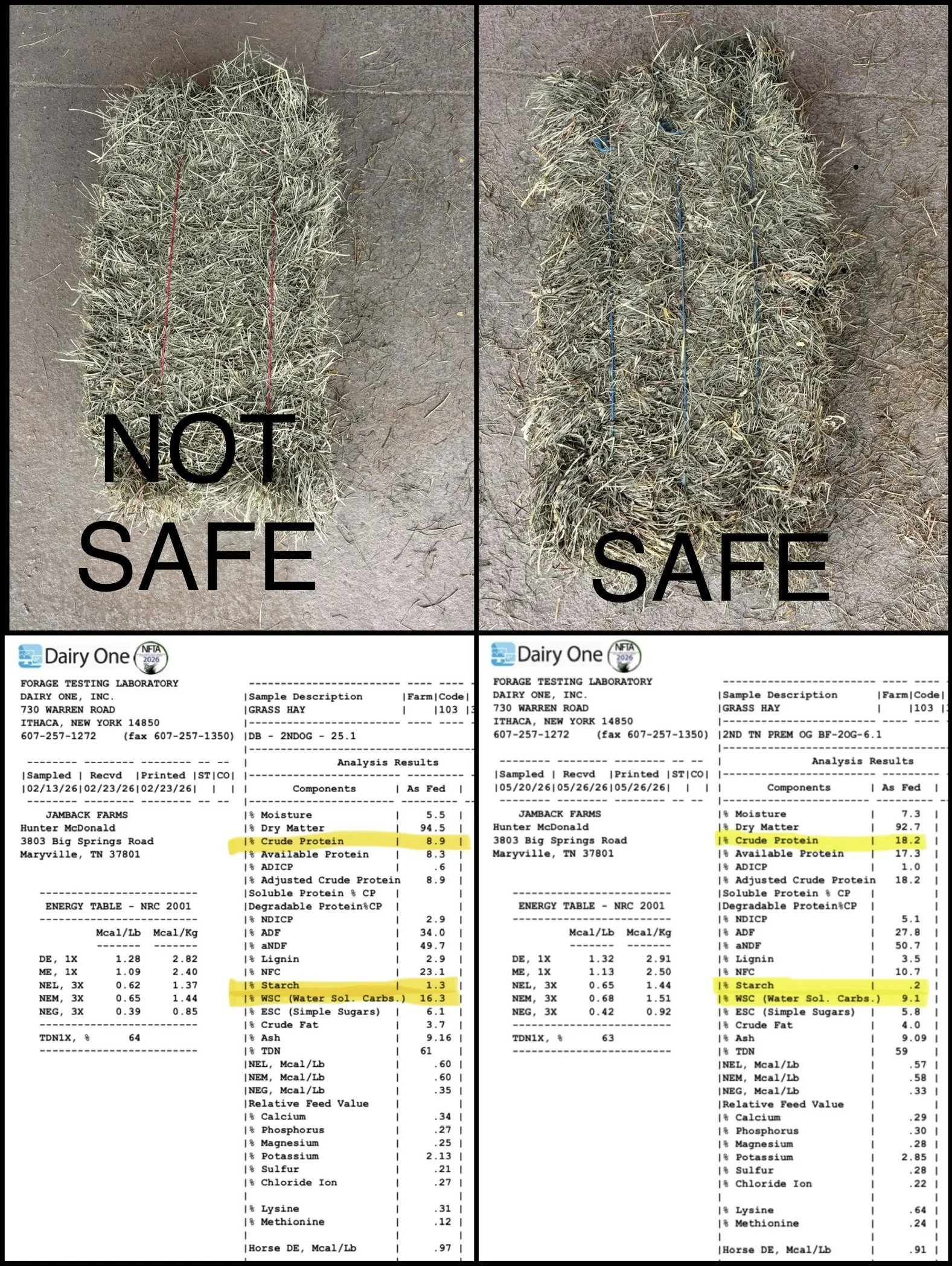
How Stem Maturity Affects Sugar Content


Why does stem size matter?

Stem size influences digestibility, chewing comfort, and palatability.

Can coarse hay cause waste?

Yes. Some animals sort through or refuse overly stemmy forage. When evaluating hay, many owners focus primarily on color or softness. While those characteristics matter, one of the most important factors influencing forage nutrition is plant maturity at harvest.

The stage at which hay is cut can dramatically affect:

  • sugar content,

  • digestibility,

  • texture,

  • fiber levels,

  • and overall feeding value.

Understanding maturity helps owners make more informed decisions for animals with different nutritional needs.

What Is Forage Maturity?

Forage maturity refers to the stage of plant growth when hay is harvested.

Younger forage is generally:

  • leafier,

  • softer,

  • and more digestible.

More mature forage typically becomes:

  • stemmier,

  • coarser,

  • and higher in structural fiber.

Neither stage is automatically “good” or “bad.”

Different animals may benefit from different forage characteristics depending on:

  • age,

  • metabolism,

  • digestive sensitivity,

  • workload,

  • and calorie requirements.

Younger Hay Often Contains More Energy

Immature forage tends to contain:

  • higher digestibility,

  • more available energy,

  • softer texture,

  • and greater palatability.

This can make it useful for:

  • performance horses,

  • hard keepers,

  • senior animals,

  • lactating mares,

  • or picky eaters.

However, immature forage may also contain elevated sugar levels under certain growing conditions.

For metabolically sensitive horses, this becomes an important consideration.

Mature Hay Provides More Structural Fiber

As plants mature, fiber content increases and digestibility generally declines.

More mature hay may contain:

  • larger stems,

  • lower calorie density,

  • and more chewing fiber.

For some easy keepers, slightly more mature forage can help support weight management while still allowing regular forage intake.

However, extremely coarse hay may become problematic for:

  • senior horses,

  • rabbits,

  • guinea pigs,

  • or animals with dental challenges.

Balance remains important.

Sugar Levels Are Complex

Many owners assume younger hay is always higher in sugar, but the reality is more complicated.

Sugar accumulation depends on many variables, including:

  • sunlight,

  • temperature,

  • moisture,

  • plant stress,

  • and harvest timing.

Plant maturity is only one factor.

This is why forage testing remains the most accurate way to evaluate NSC levels.

Visual appearance alone cannot reliably determine sugar content.

Texture Influences Consumption

Animals are often highly sensitive to forage texture.

Softer, leafier hay is generally:

  • easier to chew,

  • more palatable,

  • and more comfortable for sensitive animals.

This can be especially important for:

  • senior horses,

  • rabbits,

  • guinea pigs,

  • camelids,

  • and picky eaters.

Meanwhile, some animals may waste significant amounts of coarse or stemmy forage.

The ideal maturity level often depends on the individual animal’s nutritional goals and feeding behavior.

Matching Forage to the Animal

One of the biggest mistakes owners make is assuming all animals require the same hay.

For example:

  • a hard-keeping senior horse may thrive on softer, more digestible forage,

  • while an overweight easy keeper may benefit from slightly more moderate-calorie hay.

Likewise:

  • rabbits require consistent fiber intake,

  • alpacas may prefer softer textures,

  • and lactating animals often need more digestible nutrition.

Good forage management involves matching hay characteristics to the specific animal.

Consistency Still Matters

Regardless of maturity level, consistency remains extremely important.

Sudden changes in forage texture or digestibility can create:

  • digestive disruption,

  • feed refusal,

  • or body condition fluctuations.

Reliable forage sourcing helps owners maintain more stable feeding programs over time.

Practical Evaluation Tips

When evaluating hay maturity, owners often look for:

  • leaf-to-stem ratio,

  • stem thickness,

  • softness,

  • smell,

  • and overall cleanliness.

The best forage is not always the softest or greenest.

The best forage is the hay most appropriate for the individual animal’s needs.

Thoughtful forage selection supports:

  • digestive health,

  • feeding consistency,

  • body condition management,

  • and long-term nutritional success.

FAQ

Is softer hay always better?

Not necessarily. Different animals require different forage characteristics.

Does mature hay contain less sugar?

Sometimes, but sugar content varies based on many growing conditions.

Can Hay Sugars Trigger Founder?

For horse owners managing laminitis or founder-prone horses, few questions are more important than understanding the relationship between forage and metabolic health.

Many owners are surprised to learn that hay itself can sometimes contribute to nutritional challenges in susceptible horses.

While forage remains an essential part of the equine diet, the nutritional composition of hay can vary significantly, particularly when it comes to sugar and starch content.

Understanding these differences can help owners make safer, more informed feeding decisions.

What Is Founder?

Founder is commonly used to describe the painful structural damage that may occur following laminitis.

Laminitis involves inflammation and weakening within the sensitive tissues of the hoof.

In some cases, structural support inside the hoof becomes compromised, leading to rotation or sinking of the coffin bone.

Multiple factors can contribute to laminitis, including:

  • metabolic disease,

  • obesity,

  • insulin dysregulation,

  • grain overload,

  • systemic illness,

  • and pasture or forage management.

For many modern horses, especially easy keepers, nutrition plays a major role.

Hay Contains Natural Sugars

All forage contains naturally occurring sugars.

Plants produce sugars during photosynthesis and store energy for growth and survival.

When horses consume hay, they also consume those sugars.

Most healthy horses tolerate normal forage sugars without difficulty.

However, metabolically sensitive horses may struggle to regulate elevated sugar intake efficiently.

This is particularly important for horses with:

  • Equine Metabolic Syndrome,

  • Cushing’s disease,

  • obesity tendencies,

  • or previous laminitis history.

Sugar Levels Can Vary Tremendously

One of the biggest misconceptions in horse feeding is assuming all grass hay is nutritionally similar.

In reality, sugar levels may vary dramatically depending on:

  • forage species,

  • weather,

  • sunlight exposure,

  • plant maturity,

  • harvest timing,

  • fertilization,

  • and storage conditions.

Two visually similar bales may contain very different nutritional profiles.

This is why forage testing can be extremely valuable for owners managing sensitive horses.

Why Some Horses React More Strongly

Not every horse responds identically to forage sugars.

Some horses tolerate moderate NSC intake easily, while others appear highly sensitive.

Insulin dysregulation is a major factor.

When certain horses consume elevated sugar or starch levels, insulin responses may become exaggerated. Over time, this may increase laminitis risk in susceptible individuals.

This does not mean sugar is automatically dangerous for every horse.

It means that certain horses require more careful nutritional management.

Hay Selection Matters

Owners managing founder-prone horses often focus on:

  • moderate to lower NSC forage,

  • consistent hay quality,

  • clean, dust-free forage,

  • and controlled calorie intake.

Grass hays are commonly used because they may provide:

  • adequate fiber,

  • moderate energy density,

  • and consistent digestive support.

However, individual needs vary.

Some horses require stricter nutritional control than others.

Working with veterinarians and knowledgeable forage providers can help owners identify more appropriate feeding strategies.

Portion Control Is Also Important

Even relatively appropriate forage can contribute to weight gain if fed excessively.

Many easy keepers require fewer calories than owners expect.

Helpful management practices often include:

  • weighing hay,

  • monitoring body condition closely,

  • maintaining regular exercise,

  • and using slow feeders when appropriate.

The goal is balancing adequate forage intake with healthy body condition.

Restricting forage too aggressively may create additional digestive and behavioral stress.

Consistency Reduces Guesswork

Frequent forage changes can make metabolic management more difficult.

Consistent hay quality allows owners to better monitor:

  • body condition,

  • energy intake,

  • feeding behavior,

  • and overall nutritional response.

Many horses benefit from gradual transitions and stable feeding routines.

Predictability often becomes an important part of long-term management success.

Feeding the Individual Horse

There is no single feeding program appropriate for every horse prone to founder.

Age, workload, metabolism, body condition, and medical history all influence nutritional needs.

Thoughtful forage management can play a meaningful role in helping horses maintain comfort and long-term stability.

The focus should always remain on individualized feeding rather than relying on overly simplistic rules.

FAQ

Can hay sugars contribute to laminitis?

In metabolically sensitive horses, elevated sugar intake may increase laminitis risk.

Is all grass hay low in sugar?

No. Sugar levels vary significantly depending on harvest and growing conditions.

Should founder-prone horses avoid hay?

No. Horses still require forage for digestive and behavioral health.

What does NSC mean?

NSC refers to non-structural carbohydrates, including sugars and starches found in forage.


Orchardgrass vs Timothy for Easy Keepers

Owners of easy keeper horses often spend a great deal of time trying to balance nutrition carefully. Some horses seem capable of gaining weight simply by looking at feed, while others maintain body condition effortlessly even on modest forage programs.

For these horses, hay selection becomes one of the most important nutritional decisions owners make.

Two of the most commonly discussed grass hays are orchardgrass and timothy. Both can be excellent forage choices depending on the individual horse, but understanding their differences can help owners make more informed feeding decisions.

What Is an Easy Keeper?

An easy keeper is a horse that maintains or gains weight very efficiently.

These horses often require fewer calories than expected and may be more prone to:

  • obesity,

  • insulin dysregulation,

  • Equine Metabolic Syndrome,

  • or laminitis.

Many easy keepers thrive on carefully controlled forage programs focused on:

  • moderate calorie intake,

  • good fiber quality,

  • digestive stability,

  • and consistent feeding management.

This is where forage selection matters.

Understanding Orchardgrass Hay

Orchardgrass is widely appreciated for its:

  • softness,

  • palatability,

  • leafy texture,

  • and digestibility.

Many horses readily consume orchardgrass because it tends to be softer and more appealing than coarse or overly mature forage.

Depending on maturity and harvest conditions, orchardgrass may provide:

  • moderate protein levels,

  • good digestible fiber,

  • and relatively comfortable chewing texture.

This can make it especially useful for:

  • senior horses,

  • picky eaters,

  • horses with dental challenges,

  • or animals requiring softer forage.

However, because orchardgrass is often highly palatable, some easy keepers may overconsume it if portions are not managed carefully.

Understanding Timothy Hay

Timothy hay is another popular grass forage commonly fed to horses, rabbits, and small herbivores.

Many owners appreciate timothy for its:

  • consistent fiber structure,

  • moderate digestibility,

  • and broad suitability across different animal types.

Timothy is often slightly coarser than orchardgrass, though this varies considerably depending on maturity and harvest timing.

Properly harvested timothy can still be soft, leafy, and highly digestible.

Many easy keepers perform well on timothy because it often provides:

  • steady fiber intake,

  • moderate calorie levels,

  • and good chewing activity.

Maturity Often Matters More Than Species

One of the most important concepts owners should understand is that maturity frequently matters more than forage species alone.

An immature orchardgrass harvested early may differ dramatically from a mature orchardgrass harvested later.

Likewise, timothy harvested at different stages may vary substantially in:

  • digestibility,

  • sugar content,

  • softness,

  • and calorie density.

This is why visual evaluation and forage consistency remain so important.

The goal is not simply choosing a hay species.

The goal is selecting forage appropriate for the individual horse’s needs.

Managing Calories Carefully

Easy keepers often require thoughtful calorie management year-round.

Owners sometimes unintentionally overfeed because forage appears harmless compared to grain.

However, hay still supplies calories, and some horses require surprisingly modest intake to maintain healthy body condition.

Helpful management practices may include:

  • weighing hay portions,

  • monitoring body condition regularly,

  • using slow feeders,

  • and maintaining consistent feeding schedules.

These practices help owners make gradual adjustments before significant weight gain occurs.

Digestive and Behavioral Considerations

Restricting forage too aggressively can sometimes create:

  • boredom,

  • stress,

  • digestive discomfort,

  • or undesirable behaviors.

Horses are naturally designed to consume forage throughout much of the day.

Choosing appropriate hay while managing intake carefully is often more sustainable than severe restriction.

For some horses, slightly lower-calorie forage allows owners to feed adequate volume while still maintaining healthy body condition.

No Single Hay Fits Every Horse

Some easy keepers thrive on orchardgrass.

Others maintain better condition on timothy or mixed grass hay.

Factors influencing forage selection may include:

  • age,

  • activity level,

  • metabolic status,

  • dental health,

  • digestive sensitivity,

  • and personal feeding goals.

Hay testing can also provide valuable nutritional information when managing metabolically sensitive horses.

Ultimately, the best forage program is one tailored to the individual horse rather than based solely on trends or assumptions.

FAQ

Is orchardgrass too rich for easy keepers?

Not necessarily. Nutritional value depends heavily on maturity and harvest conditions.

Is timothy lower in sugar than orchardgrass?

Not always. Sugar levels vary based on growing and harvesting conditions.

Which hay is softer?

Orchardgrass is often softer and leafier, though properly harvested timothy can also be very soft.

Should easy keepers eat less hay?

The goal is usually controlled calorie intake while still supporting digestive health and natural forage consumption.


Why Consistency Matters for Metabolic Horses

Horse owners managing metabolic conditions often focus heavily on sugar levels, calories, supplements, and pasture access. While those factors are important, one of the most overlooked aspects of feeding management is consistency.

Frequent changes in hay quality, forage type, or nutritional profile can make it much more difficult to maintain stable body condition and digestive health in sensitive horses.

For many horses prone to metabolic issues, predictable nutrition matters just as much as the forage itself.

Horses Thrive on Routine

Horses are naturally routine-oriented animals.

Their digestive systems are designed for relatively continuous forage intake throughout the day. Sudden dietary changes can disrupt normal digestive function and create unnecessary stress.

This becomes even more important in horses dealing with:

  • laminitis,

  • Equine Metabolic Syndrome,

  • obesity tendencies,

  • insulin dysregulation,

  • or Cushing’s disease.

Inconsistent forage may contribute to fluctuations in:

  • calorie intake,

  • sugar consumption,

  • digestibility,

  • and feeding behavior.

Even when changes seem small to owners, horses may respond noticeably.

Not All Hay Is Nutritionally Identical

Two bales that look similar may still differ significantly nutritionally.

Factors affecting hay quality include:

  • forage species,

  • maturity at harvest,

  • weather,

  • fertilization,

  • cutting timing,

  • storage conditions,

  • and curing practices.

This means that switching abruptly between forage sources can sometimes change:

  • sugar levels,

  • digestible energy,

  • fiber content,

  • and palatability.

For metabolically sensitive horses, those fluctuations can complicate feeding management.

Body Condition Becomes Easier to Monitor

One major benefit of consistent hay is predictability.

When horses consume relatively stable forage over time, owners can more accurately evaluate:

  • weight trends,

  • body condition,

  • appetite,

  • and energy balance.

If forage changes constantly, it becomes much harder to determine why a horse is gaining or losing weight.

Consistency reduces guesswork.

This is especially helpful for easy keepers that require careful calorie management year-round.

Digestive Stability Matters

The horse’s hindgut contains a large microbial population responsible for fermenting fiber.

These microbial populations adapt gradually to dietary conditions.

Rapid forage changes may disrupt that balance, potentially increasing digestive stress in sensitive horses.

While not every horse reacts dramatically, maintaining stable forage programs may help support:

  • digestive comfort,

  • manure consistency,

  • appetite stability,

  • and overall feeding behavior.

For horses prone to ulcers, colic tendencies, or stress-related digestive issues, consistency can be especially valuable.

Palatability Also Plays a Role

Some horses become frustrated or reluctant eaters when forage changes frequently.

Differences in:

  • texture,

  • softness,

  • stem size,

  • smell,

  • and leafiness

may influence how willingly horses consume hay.

Picky eaters often perform better when forage remains relatively predictable.

This is one reason many owners prefer working with forage suppliers capable of maintaining more consistent harvest standards throughout the year.

Seasonal Challenges

Consistency can become more difficult during seasonal transitions.

Hay shortages, weather changes, or limited inventory sometimes force abrupt forage substitutions.

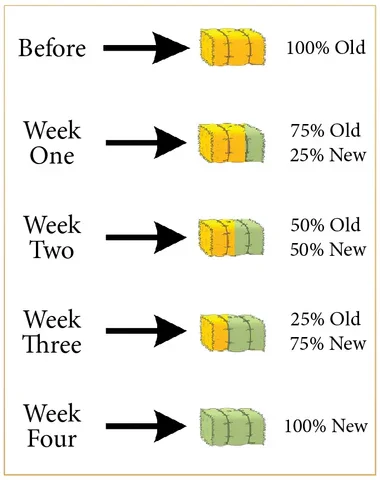
When changes are necessary, gradual transitions are generally preferred.

Helpful practices may include:

  • blending old and new hay together,

  • introducing changes slowly over several days,

  • monitoring appetite and manure closely,

  • and observing body condition carefully.

This gives the horse’s digestive system more time to adapt.

Hay Testing Helps Create Stability

Testing forage periodically can help owners better understand nutritional consistency.

Even within the same forage species, nutritional variation may occur between cuttings or fields.

Laboratory analysis helps identify:

  • sugar levels,

  • digestibility,

  • protein,

  • fiber,

  • and moisture content.

This allows owners to make more informed decisions when adjusting feeding programs.

Feeding Smarter, Not Just Feeding Less

Many metabolic horses do not necessarily require extreme feed restriction.

Instead, they often benefit most from:

  • predictable forage,

  • controlled calorie intake,

  • consistent feeding routines,

  • and individualized nutritional management.

Carefully selected hay can support both digestive health and long-term body condition management.

The goal is not perfection.

The goal is stability.

Small improvements in forage consistency can sometimes make feeding programs far easier to manage over time.

FAQ

Why are forage changes difficult for some horses?

Sudden forage changes may alter calorie intake, digestibility, and hindgut microbial balance.

How slowly should hay changes occur?

Gradual transitions over several days are generally preferred whenever possible.

Can inconsistent hay contribute to weight gain?

Changing forage quality may affect calorie intake and make body condition harder to manage.

Why does consistency matter for laminitic horses?

Stable forage helps reduce nutritional fluctuations and supports more predictable feeding management.


What Low-NSC Hay Really Means

The term “low-NSC hay” has become increasingly common in horse nutrition conversations, especially among owners managing metabolic conditions such as laminitis, Equine Metabolic Syndrome, or Cushing’s disease.

However, many owners are still unsure what NSC actually means and why it matters.

Understanding forage sugars does not require a nutrition degree, but it does require looking beyond general labels like “horse hay” or “premium hay.” Nutritional differences between forage lots can be significant, and those differences may affect certain horses more than others.

What Does NSC Stand For?

NSC stands for non-structural carbohydrates.

In simple terms, NSC refers primarily to sugars and starches contained within forage.

Plants naturally produce sugars through photosynthesis. These sugars help fuel plant growth and energy storage. Horses then consume those sugars when eating hay or pasture.

Many healthy horses tolerate moderate sugar levels without problems. However, metabolically sensitive horses may have difficulty processing elevated sugar intake efficiently.

For some horses, excessive sugar intake may contribute to:

  • weight gain,

  • insulin dysregulation,

  • hoof soreness,

  • or increased laminitis risk.

This is why owners often seek hay with lower NSC values.

Why Visual Appearance Is Not Enough

One of the biggest misconceptions in hay selection is assuming appearance tells the entire nutritional story.

A soft, green, leafy bale may look excellent while still testing relatively high in sugars.

Conversely, a slightly more mature hay may contain lower sugar levels while still providing adequate fiber and digestibility.

Weather conditions, cutting timing, sunlight exposure, and plant maturity all influence forage sugar levels.

Without laboratory testing, estimating NSC accurately can be difficult.

This is why hay testing has become increasingly important for owners managing metabolic horses.

What Is Considered “Low” NSC?

There is no universal definition that applies perfectly to every horse.

However, many veterinarians and nutritionists commonly look for hay below certain NSC thresholds when managing metabolic conditions.

Appropriate levels often depend on:

  • the horse’s medical history,

  • insulin sensitivity,

  • body condition,

  • workload,

  • and overall feeding program.

Some horses require stricter sugar control than others.

Because individual needs vary, forage selection should ideally be part of a broader nutritional management plan.

hay type Matters

Different forage species naturally vary in nutritional characteristics.

Grass hays are often favored for easy keepers because they may provide:

  • moderate calorie levels,

  • good fiber content,

  • and lower energy density than richer feeds.

Common options may include:

  • orchardgrass,

  • timothy,

  • bermudagrass,

  • or mixed grass hay.

However, species alone does not guarantee sugar content.

An orchardgrass hay harvested under certain conditions could test higher in NSC than another grass harvested differently.

This reinforces the importance of consistency and testing.

Why Digestive Health Still Matters

Owners sometimes become so focused on reducing sugar that they accidentally select forage that is too coarse, stemmy, or poorly digestible.

Fiber quality still matters tremendously.

Horses require adequate chewing activity and healthy digestive function. Extremely poor-quality forage may create additional issues, especially for:

  • senior horses,

  • horses with dental problems,

  • or hard keepers.

The goal is not simply finding the lowest sugar number possible.

The goal is finding balanced forage appropriate for the individual horse.

Feeding Management Is Also Important

Even excellent hay can become problematic if feeding management is inconsistent.

Helpful practices often include:

  • gradual forage transitions,

  • consistent feeding schedules,

  • controlled portion sizes,

  • regular body condition monitoring,

  • and appropriate exercise when possible.

Many owners also find slow feeders useful because they help extend forage consumption time while reducing boredom and rapid eating.

Hay Testing Provides Clarity

For owners managing medically sensitive horses, forage testing often provides valuable peace of mind.

Laboratory analysis can reveal:

  • NSC levels,

  • protein,

  • fiber,

  • digestibility,

  • moisture,

  • and mineral information.

This allows owners to make decisions based on measurable nutritional information rather than assumptions.

For horses with previous laminitis episodes, that information can be especially valuable.

Individualized Feeding Matters

No single hay works perfectly for every horse.

Some horses maintain excellent condition on moderate-calorie grass hay, while others may require additional calories or softer forage.

The best feeding programs typically focus on:

  • consistency,

  • forage quality,

  • appropriate calorie balance,

  • digestive health,

  • and the individual animal’s needs.

Careful forage selection is not about chasing trends.

It is about supporting long-term animal health through thoughtful nutritional management.


FAQ

What is NSC in horse hay?

NSC refers to the sugars and starches contained within forage.

Why do metabolic horses need lower NSC hay?

Some metabolically sensitive horses may struggle to regulate elevated sugar intake effectively.

Can you tell sugar levels by looking at hay?

Not reliably. Laboratory forage testing is the most accurate method.

Is all grass hay low in sugar?

No. Sugar levels vary significantly depending on growing and harvesting conditions.


Understanding the Link Between Hay and Laminitis

Laminitis is one of the most frustrating and emotionally difficult conditions many horse owners will ever manage. Horses that appear healthy one season can suddenly become sore, reluctant to move, or painfully sensitive in their feet. In many cases, owners are left searching for answers about grain, pasture, supplements, and medications while overlooking one of the largest parts of the horse’s daily diet: forage.

For horses prone to founder or laminitis, hay quality matters tremendously.

Not all hay is nutritionally identical. Different forage species, maturity levels, growing conditions, and harvesting practices can create major differences in sugar, starch, digestibility, and calorie levels. Understanding these differences can help owners make more informed feeding decisions and support long-term metabolic stability.

Why Hay Matters So Much

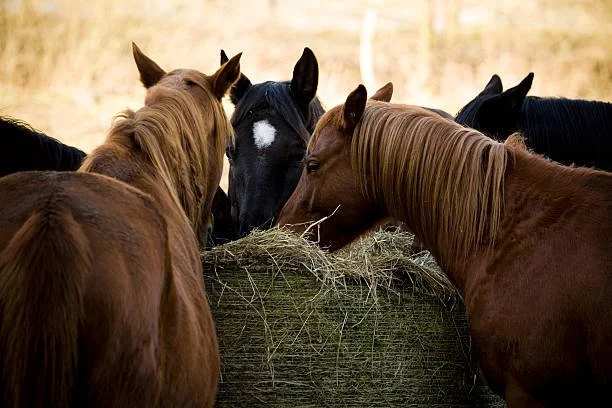
“Group of horses eating hay at the same time” by AndreasKermann via gettyimages.com

Most horses consume forage for the majority of the day. Even horses receiving concentrates or supplements still rely heavily on hay as their primary calorie source.

For metabolically sensitive horses, this becomes especially important because certain hays may contain elevated levels of non-structural carbohydrates, often abbreviated as NSC. NSC includes sugars and starches that can contribute to insulin dysregulation in susceptible horses.

While not every horse reacts the same way, many horses with:

  • laminitis,

  • Equine Metabolic Syndrome,

  • obesity tendencies,

  • or Cushing’s disease

benefit from carefully managed forage programs.

This does not necessarily mean horses must eat poor-quality hay. In fact, many horses thrive on premium forage that has been selected specifically for lower sugar content, appropriate maturity, and consistent nutritional characteristics.

Understanding Hay Sugars

Horse owners are often surprised to learn that hay can vary tremendously in sugar levels.

Factors influencing hay sugars include:

  • forage species,

  • weather conditions,

  • sunlight exposure,

  • plant maturity,

  • fertilization,

  • cutting schedules,

  • and storage conditions.

For example, immature grasses harvested during periods of intense sunlight may contain higher sugar concentrations than more mature forage harvested under different conditions.

This is why visual appearance alone cannot always determine whether a hay is appropriate for a metabolic horse.

Soft, green, leafy hay may look ideal but still contain elevated sugar levels. On the other hand, extremely coarse hay may be less digestible and difficult for some horses to maintain body condition on.

The goal is balance.

Consistency Is Often Overlooked

One of the most important but underappreciated aspects of feeding metabolic horses is consistency.

Frequent dramatic changes in forage type can sometimes contribute to digestive upset, fluctuations in calorie intake, or unpredictable metabolic responses.

Horses generally do best when forage changes are gradual and predictable.

Consistent hay quality helps owners:

  • better monitor body condition,

  • manage weight more effectively,

  • reduce feeding guesswork,

  • and maintain stable digestive function.

For many owners, consistency becomes just as valuable as the hay itself.

Choosing Appropriate Hay Types

There is no single “perfect” hay for every horse with laminitis.

However, many owners and veterinarians commonly look for:

  • moderate to lower NSC levels,

  • clean forage,

  • minimal dust,

  • good digestibility,

  • and consistent harvest quality.

Grass hays are often preferred over richer legume-heavy options for easy keepers, though every horse should be evaluated individually.

Orchardgrass, timothy, bermudagrass, and carefully managed mixed grass hays are frequently used in metabolic feeding programs depending on the horse’s condition, activity level, and overall calorie needs.

Hay testing can also be extremely helpful.

Laboratory forage analysis provides a much clearer nutritional picture than visual evaluation alone. Testing allows owners to better understand:

  • sugar levels,

  • protein,

  • fiber,

  • digestibility,

  • and mineral balance.

This can be especially useful for horses with recurring laminitis episodes or difficult weight-management situations.

The Importance of Weight Management

Excess body condition is a major risk factor for many metabolic horses.

Even small amounts of gradual weight gain over time can increase stress on the horse’s metabolic system. Unfortunately, many easy keepers require surprisingly few calories to maintain weight.

Owners sometimes unintentionally overfeed because the horse appears hungry or because traditional feeding programs are designed for higher-calorie needs.

Forage selection can help manage calorie intake more effectively while still supporting:

  • digestive health,

  • chewing behavior,

  • and emotional well-being.

Horses are naturally designed to consume forage regularly throughout the day. Severely restricting hay can sometimes create additional digestive and behavioral challenges.

The goal is not simply feeding less.

The goal is feeding smarter.

Practical Feeding Considerations

Owners managing laminitis-prone horses

often benefit from:

tributeequinenutrition.com by Tribute Equine Nutrition

  • weighing hay portions rather than estimating,

  • using slow feeders when appropriate,

  • maintaining consistent feeding schedules,

  • monitoring seasonal weight fluctuations,

  • and introducing forage changes gradually.

Pasture management also matters tremendously. In some situations, pasture sugars may exceed those found in properly selected hay.

Working closely with a veterinarian and knowledgeable forage provider can help owners develop a more individualized feeding approach.

Small Changes Can Make a Big Difference

Many horses with metabolic challenges continue living comfortable, active lives with thoughtful nutritional management.

While hay alone is rarely the only factor involved in laminitis, forage quality often plays a central role in long-term success.

Understanding forage characteristics, selecting consistent hay sources, and matching nutrition to the individual horse can help owners make more confident feeding decisions.

Every horse is different, and forage programs should reflect those individual needs rather than relying on one-size-fits-all feeding practices.


FAQ

What does low-NSC hay mean?

Low-NSC hay refers to forage with lower levels of sugars and starches, which may be beneficial for horses with metabolic concerns.

Is alfalfa safe for horses with laminitis?

Some horses tolerate limited alfalfa well, while others may do better on primarily grass-based forage programs. Individual needs vary.

Can soaking hay reduce sugar?

Soaking hay may reduce some water-soluble carbohydrates, though results vary depending on hay type and soaking duration.

Why does consistency matter for metabolic horses?

Consistent forage helps reduce nutritional fluctuations and makes body condition management easier.